
Consumer Unit Upgrade: The Complete Homeowner’s Guide
Last updated: 2024 | Written by NextPhase Energy Ltd — NAPIT Registered Electricians serving Goole, Selby, York, Howden and East Riding of Yorkshire
What Is a Consumer Unit?
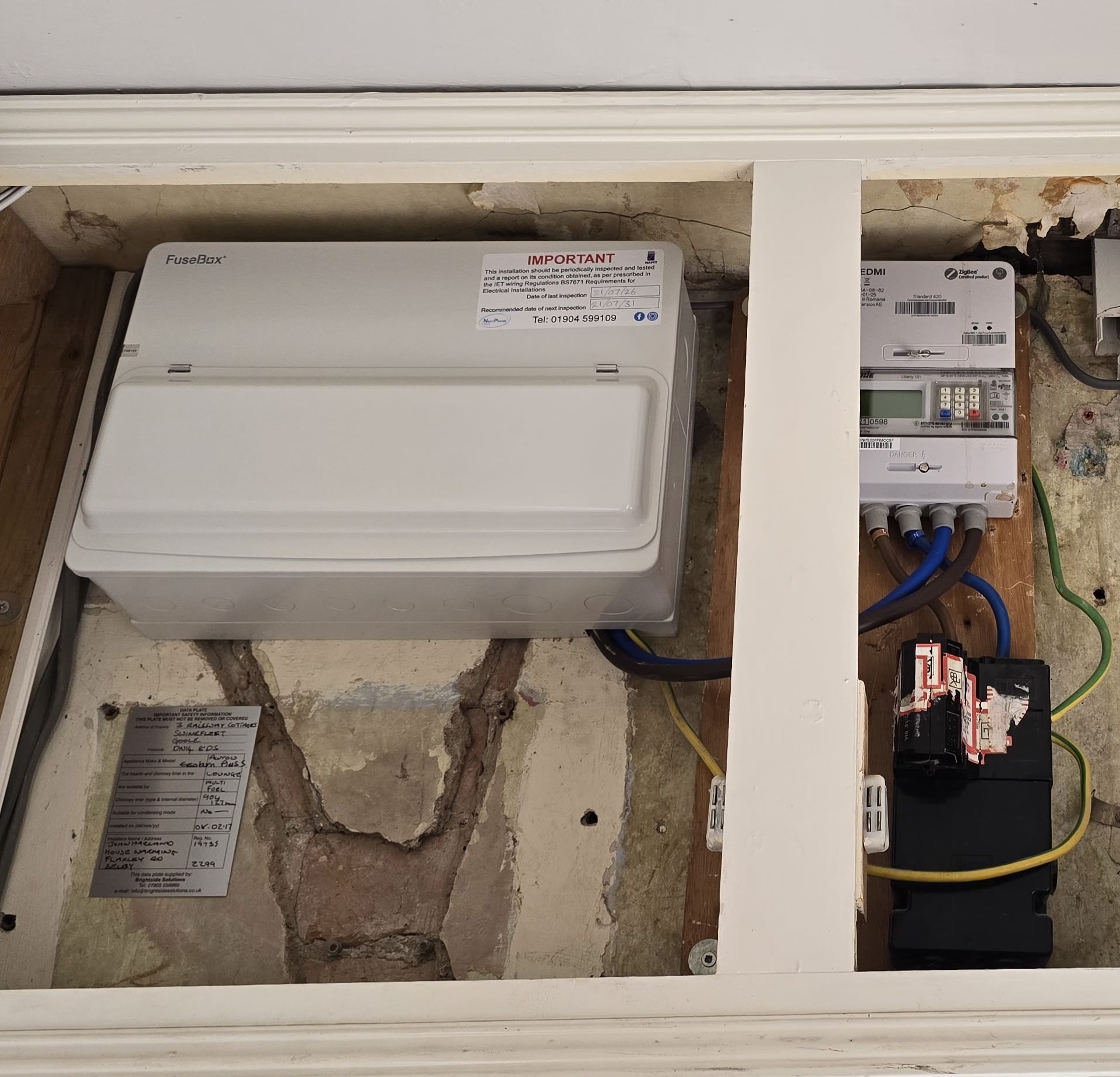
A consumer unit is the main electrical distribution board in your home. It receives electricity from the grid, splits it into individual circuits, and protects each one with a circuit breaker. It also includes safety devices that cut the power if a fault is detected, protecting you from electric shock and fire.
Your consumer unit is the most important piece of electrical equipment in your home. It sits between the electricity meter and every circuit in your property — lights, sockets, cooker, shower, and anything else that runs on electricity.
What Does a Consumer Unit Actually Do?
It does three main things: Distributes electricity from the supply into individual circuits; Protects each circuit using circuit breakers; Protects people using RCDs or RCBOs, which cut the power within milliseconds if a fault could cause electric shock or fire.
12 Signs You May Need a Consumer Unit Upgrade
Signs you need a new consumer unit include: your board has rewirable fuses instead of circuit breakers, it has no RCD protection, it trips frequently, it is more than 25 years old, you are adding an EV charger or new circuits, or your electrician has flagged it on an EICR.
- You Have Rewirable Fuses — No automatic protection; must be replaced manually when blown.
- There Is No RCD Protection — An RCD can cut the power in as little as 30 milliseconds, fast enough to save a life.
- Your Board Keeps Tripping — A single RCD protecting too many circuits causes nuisance trips.
- Your Board Is a Split-Load Design With Persistent Trips — A fault on one side takes out multiple circuits.
- Your Board Is Over 25 Years Old — Boards installed before 1999 were not designed to meet current safety standards.
- The Board Is Plastic — All consumer units installed in domestic properties must now be metal-clad under the 18th Edition Wiring Regulations.
- You Are Planning to Install an EV Charger — Most EV charger installations require a dedicated circuit from the consumer unit.
- You Are Planning a Major Renovation — Adding new circuits will often need more capacity than your existing board provides.
- You Are Selling Your Home — An old fuse board flagged on an EICR can slow a sale or give buyers leverage to renegotiate.
- An Electrician Has Recommended It — If an EICR notes the consumer unit as C2 or C3, take that seriously.
- You Have Had a New Addition to the Family — Modern consumer units with full RCBO protection offer a significantly higher level of safety.
- You Are Installing Solar Panels or Battery Storage — A solar PV or battery storage installation will often require new circuits.
What Is a Modern RCBO Consumer Unit?
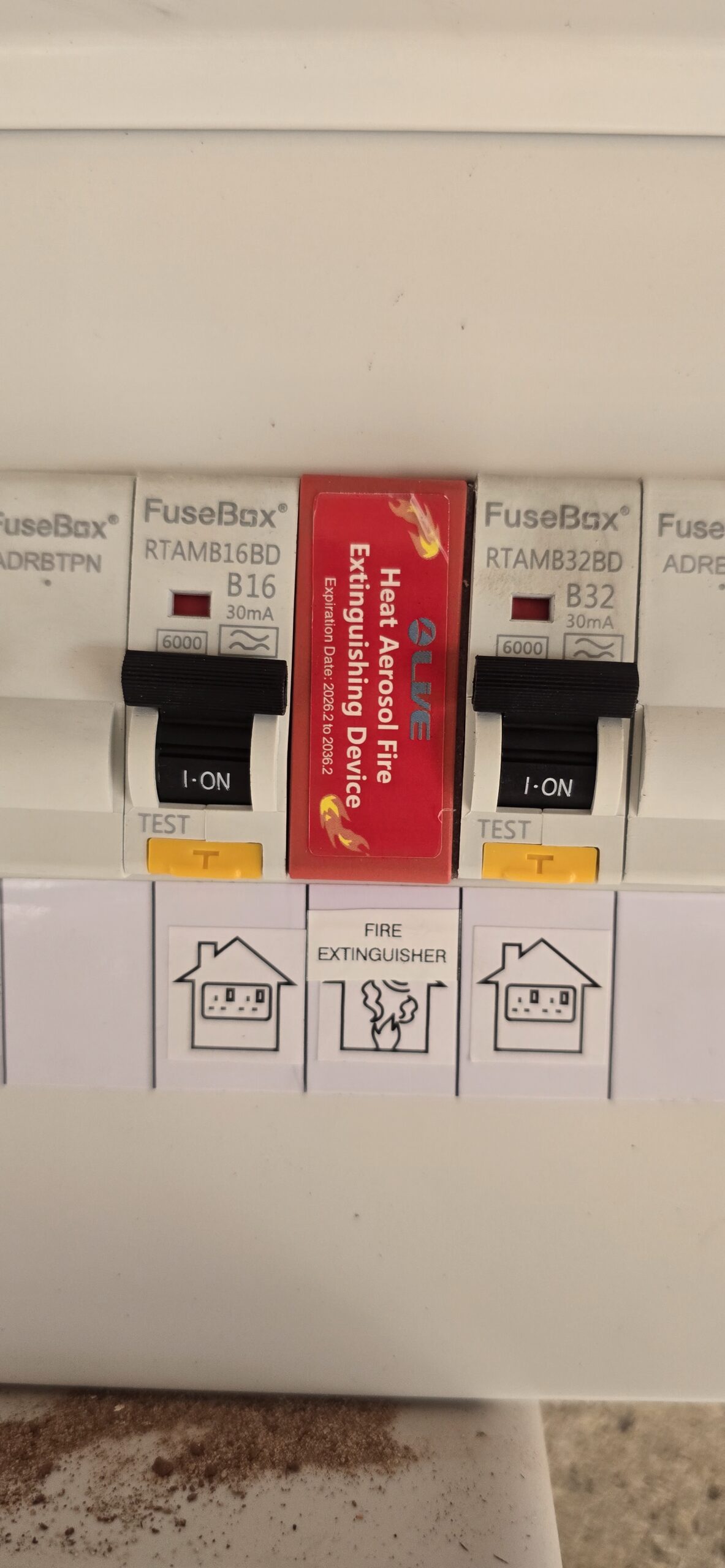
RCBO stands for Residual Current Breaker with Overcurrent protection. Each circuit in your home gets its own RCBO, combining the function of an RCD and a circuit breaker. If one circuit develops a fault, only that circuit trips. The rest of your home stays powered.
Why Modern Consumer Units Are Safer
| Feature | Old rewirable fuse board | Modern RCBO consumer unit |
|---|---|---|
| Circuit protection | Fuse wire (manual replacement) | Automatic circuit breaker |
| RCD protection | None | Yes — individual per circuit |
| Shock protection | None | Yes — 30mA RCD in every RCBO |
| Nuisance tripping | Can take out all circuits | Only trips affected circuit |
| Enclosure | Often plastic | Metal (required by regulations) |
| Compliance | Does not meet current standards | Meets 18th Edition BS 7671 |
Surge Protection Devices (SPDs)
A surge protection device protects your home from sudden voltage spikes. Modern electronics — laptops, smart TVs, heat pumps, EV chargers — are particularly sensitive. The 18th Edition Wiring Regulations introduced a requirement to consider SPDs for all new installations. I always discuss SPDs when carrying out a consumer unit upgrade.
Consumer Unit Regulations in the UK
Consumer unit upgrades are notifiable work under Part P of the Building Regulations. As a NAPIT-registered electrician, I self-certify my work. All consumer units in domestic premises must be metal-clad under BS 7671. You receive an Electrical Installation Certificate for every job — this is the legal record that the work complies with the current wiring regulations.
What Happens on Installation Day?
- Initial Assessment — Inspection of the existing installation, earthing, and accessible wiring.
- Isolation — Power is isolated at the meter. The whole property loses power.
- Removal of Old Board — Circuits are carefully labelled before removal.
- Installation of New Board — New metal-clad RCBO consumer unit mounted and wired. Earthing and bonding checked.
- Testing — Continuity of protective conductors, insulation resistance, polarity, earth fault loop impedance, RCD operation times.
- Energisation — Power restored circuit by circuit. Everything checked.
- Certification — Electrical Installation Certificate issued before I leave.
How Long Does a Consumer Unit Upgrade Take?
A consumer unit upgrade typically takes between 4 and 8 hours for a standard domestic property. Most homeowners have their power restored the same day.
How Much Does a Consumer Unit Upgrade Cost in Yorkshire?
A consumer unit upgrade in Yorkshire typically costs between £400 and £900 for a standard domestic property. The exact price depends on the number of circuits, the condition of existing wiring, and whether any additional work is required. Always use a registered electrician and ensure you receive an Electrical Installation Certificate.
| Factor | Impact on price |
|---|---|
| Number of circuits | More circuits = more RCBOs = higher materials cost |
| Condition of existing wiring | Poor wiring may require additional remedial work |
| Surge protection device | Optional addition, typically £80–£150 |
| Combined works | Combining with EV charger often reduces overall cost |
Consumer Unit Upgrade Before an EV Charger
Most EV chargers require a dedicated 32A or 40A circuit from the consumer unit. If your board is old, full, or lacks capacity, an upgrade will be required. In many cases the consumer unit upgrade and EV charger installation can be completed on the same day, reducing disruption and labour costs.
Consumer Unit Upgrade Before Selling Your Home
An old consumer unit — particularly one with rewirable fuses and no RCD protection — can raise concerns during a property sale. Buyers’ solicitors and surveyors increasingly flag outdated electrics. Upgrading before listing can avoid renegotiation, speed up the sale, and give buyers confidence in the property.
Frequently Asked Questions
How do I know if my fuse board needs replacing? The most obvious signs are rewirable ceramic fuses, no RCD protection, or a plastic enclosure. Other signs include regular tripping or a board that is more than 25 years old.
What is the difference between an RCD and an RCBO? An RCD protects multiple circuits — if one circuit faults, it takes all those circuits off. An RCBO gives each individual circuit its own protection, so a fault only affects that circuit.
Will the power be off all day? Yes, for most of the day. I aim to restore power by late afternoon. Charge your devices the night before.
Do I need to notify building control? If you use a NAPIT-registered electrician, notification is handled automatically. You do not need to contact building control yourself.
What certificate should I receive? You should receive an Electrical Installation Certificate (EIC). Keep it safe — you will need it if you sell the property.
How much does a consumer unit upgrade cost in Yorkshire? Typically between £400 and £900 for a standard domestic property. I provide written quotes before any work starts.
What areas do you cover? I cover Goole, Howden, Selby, York, Snaith, Eggborough, Drax, Camblesforth, Barlby, Escrick, Market Weighton, Pollington, Eastrington, Wetherby and surrounding villages across East Riding of Yorkshire and North Yorkshire.
Ready to Book Your Consumer Unit Upgrade?
If you are based in Goole, Selby, York, Howden or anywhere across East Riding of Yorkshire or North Yorkshire, I would be happy to help. I offer honest advice, clear pricing, and thorough work — backed by NAPIT registration and the Which? Trusted Trader scheme.
- Request a free quote
- Book a consumer unit upgrade
- Book an EICR
- Find out about EV charger installation
NextPhase Energy Ltd — NAPIT Registered | Which? Trusted Trader | Swinefleet, East Riding of Yorkshire. All work carried out in accordance with BS 7671 18th Edition and notified through the NAPIT competent persons scheme.