
Do I Need a Fuse Board Upgrade for an EV Charger?
Short answer: maybe. Long answer: it depends on your current setup. I get asked this question regularly, and I never give a blanket yes or no because it really does vary. Some homes can have an EV charger installed without touching the fuse board. Others absolutely need an upgrade. Let me walk you through the factors that determine which camp you’re in. What Happens in a Survey When you contact me about an EV charger, the first step is always a survey. I come to your property, I look at your fuse board, I check what circuits you’ve got, I look at the cable runs, I assess the general condition of your electrics. I’m trying to answer three key questions: Is your board old enough to need replacing anyway? Does it have spare capacity for a 32-amp EV charger circuit? Is it fitted with RCD protection? If the answer to these questions is no, no, no, then you definitely need an upgrade. If it’s yes, yes, yes, then you probably don’t. When You Can Definitely Avoid the Upgrade If your home was rewired or has had a new consumer unit installed in the last ten years, you’re likely fine. Modern boards are designed with spare capacity. If you’ve got a 100-amp main supply and not many circuits in use, you’ll have the headroom. The real question is whether there’s a spare 32-amp way available on your board. If there is, and your installation is generally sound and up to standard, we can install the charger circuit into that spare way. Job done. No board upgrade needed. When You Definitely Do Need an Upgrade If your home still has a rewireable fuse box, it needs replacing. These are not safe by modern standards and they won’t accommodate an EV charger anyway. If your board is more than 25 years old, it’s probably due for replacement regardless of the charger. You’ll want modern RCD protection and reliable circuit breakers instead of aging components. If your main supply is only 60 amps, you’re likely at or near capacity already. Adding a 32-amp charger circuit would overload the installation. If your current board doesn’t have RCD protection, that’s a safety issue that needs fixing. A new board puts that right. If there’s literally no spare ways on your board, you can’t add the charger circuit. You need more ways. What Triggers the Most Common Upgrades In my experience, the most common reason for needing an upgrade is an old board with no RCD protection and no spare capacity. These homes were often wired 20 to 30 years ago. They might have a 60-amp or 80-amp main supply. They’ve got their original circuits running the lights, sockets, cooker, and heating. There’s nowhere to add a new 32-amp circuit for the charger. The second common scenario is homes with rewireable fuses. These need replacing for safety reasons even if they had space. The third is homeowners who’ve already maxed out their board capacity with other work. Cost Implications If you need an upgrade, budget £500 to £1,200 depending on the complexity. The work usually takes one day. You’ll get a new consumer unit with modern RCD protection, proper circuit breakers, and spare ways for future work. If you don’t need an upgrade, your charger installation cost drops significantly. It’s just the charger unit, the cable run, testing, and certification. The Honest Truth Most homes built in the last 15 years can have an EV charger installed without a board upgrade. A lot of homes older than that will need one. The only way to know is to have someone qualified visit and assess your setup. Don’t try to guess or rely on advice from online forums. Get a proper survey done. It’s the only way to know for certain, and it protects you and your investment. I survey every job before giving a quote. If you’re in Selby, York, Goole, or surrounding areas and you’re thinking about an EV charger, ring me on 01904 599109. We’ll arrange a survey and I’ll give you a clear answer about whether you need a board upgrade, and what the full cost will be. For more on EV charger installation, visit my EV charger installation page. If you need a fuse board upgrade, see my fuse board upgrade page for full details.
Best Home EV Chargers UK 2026: Zappi vs Hypervolt vs Ohme. An Installer’s Honest View
I’ve been installing EV chargers for three years now, and I get asked the same question almost every week. Which charger should I buy, Zappi, Hypervolt, or Ohme? There’s no perfect answer because it depends on what matters to you and your situation. But I’ll give you my honest take on each one, having installed all three repeatedly. Zappi The Zappi is made by Myenergi and it’s designed with solar homes in mind. If you’ve got solar panels, this is probably your best choice. It can intelligently use excess solar energy to charge your car for free, and it learns your patterns over time to maximise that. What it does well: solar integration is genuinely brilliant, much better than the alternatives. The smart tariff integration works smoothly. The build quality is solid. The app is straightforward and does what you need without being over-complicated. Where it falls short: it’s not the cheapest option upfront. Some people find the app interface a bit dated. If you don’t have solar, you’re paying for features you won’t use. Who it suits best: anyone with solar panels, anyone who wants maximum smart charging flexibility, anyone who values reliable UK-made equipment. Rough price: £700 to £900 for the unit alone, depending on where you buy. Hypervolt Hypervolt is the stylish option. It looks good on any house wall. It’s been around a long time and there are lots of them installed. The app control is slick and modern. What it does well: the design is excellent, probably the most attractive charger on the market. The app is easy to use and responsive. Installation is straightforward. Smart tariff integration works well. It’s reliable and well-supported. Where it falls short: it doesn’t have solar integration features like Zappi. It’s competitively priced but not the cheapest. Nothing major, it’s just a more straightforward product without the solar bells and whistles. Who it suits best: anyone who wants a charger that looks good, anyone without solar, anyone who wants a proven, reliable product without unnecessary complexity. Rough price: £600 to £850 for the unit. Ohme Ohme is the cost-conscious option. It does the job well and doesn’t waste money on features you might not need. What it does well: it’s the most affordable. The build quality is solid despite the lower price. Smart charging integration works. The app is simple and functional. It’s an honest product that does what it says. Where it falls short: it doesn’t have solar integration. The app isn’t quite as polished as Hypervolt. It’s less well-established than Zappi or Hypervolt, so fewer installers know it well. Who it suits best: anyone on a tighter budget, anyone without solar, anyone who just wants a reliable, no-nonsense charger that gets the job done. Rough price: £400 to £600 for the unit. Summary If you have solar panels, Zappi wins. The solar integration alone makes it worth the premium, and you’ll recoup the extra cost in free charging over time. If you don’t have solar and you want the best overall experience, Hypervolt is hard to beat. It’s reliable, looks great, and the app is excellent. If budget is your priority, Ohme is a solid choice. You’re not compromising on quality or safety, you’re just getting a more straightforward product. All three are safe, reliable, and properly installed will work for the lifetime of your car. For more details on each charger, visit my Zappi installer page or Hypervolt installer page. Or see my main EV charger installation page for the full picture. One Important Thing None of these chargers matter if your installation is poor or your electrician isn’t qualified. Make sure whoever installs your charger is NAPIT or NICEIC registered. A bad installation can void warranties and create safety risks. I install all three chargers regularly throughout Selby, York, Goole, and surrounding areas. If you’ve bought an electric car and you’re stuck on which charger to choose, give me a call on 01904 599109. We can talk through what matters to you and I’ll help you make the right decision.
Meter Tails and Consumer Unit Upgrades | Goole Electrician
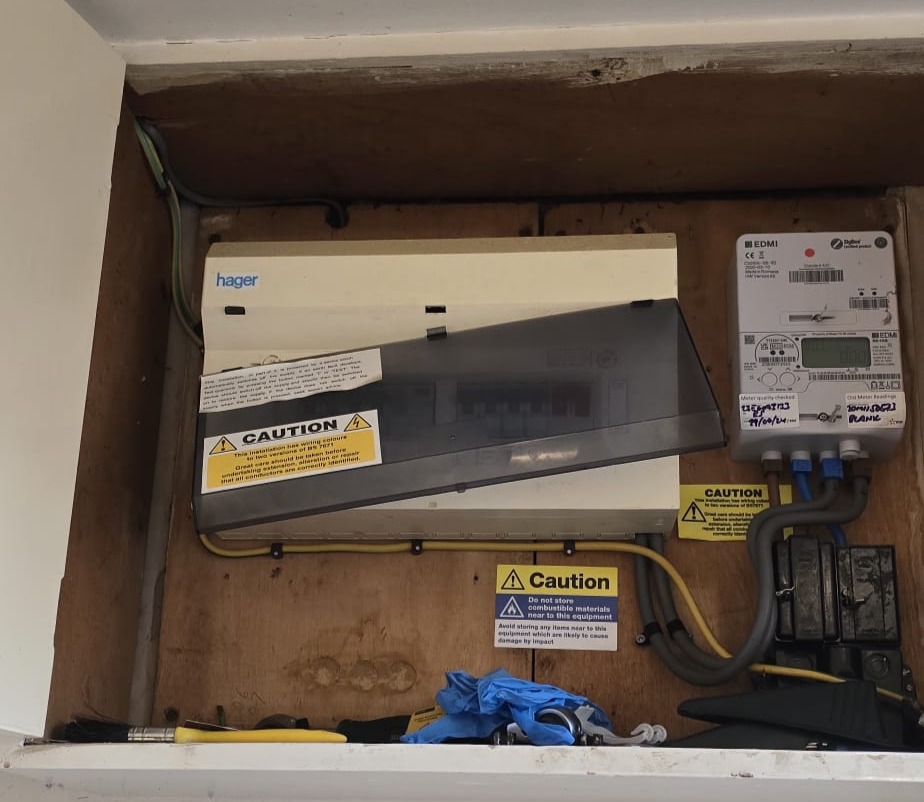
Why meter tails are often replaced during a consumer unit upgradeMeter Tails and Consumer Unit Upgrades | Goole ElectricianWhy meter tails are often replaced during a consumer unit upgradeMeter Tails and Consumer Unit Upgrades | Goole ElectricianWhy meter tails are often replaced during a consumer unit upgradeMeter Tails and Consumer Unit Upgrades | Goole ElectricianWhy meter tails are often replaced during a consumer unit upgrade When homeowners are quoted for a consumer unit upgrade, one of the most common questions we hear is: “Why do the meter tails need changing as well?” It’s a fair question. Meter tails aren’t something most people ever think about, but they play a critical role in the safety and reliability of your electrical system. In many cases, replacing them isn’t optional. It’s part of doing the job correctly. What are meter tails? Meter tails are the main cables that supply electricity from the electricity meter to your consumer unit (fuse board). They carry the full electrical load of the property. Everything in the house relies on them. If they’re undersized, damaged, or deteriorated, the entire installation is compromised, regardless of how modern the new consumer unit is. Why older meter tails are often no longer suitable In many properties, especially those built or rewired years ago, meter tails are commonly found to be: Undersized, often 16mm² Installed before modern electrical demands Showing signs of insulation wear or heat damage Homes today use significantly more electricity than they did even 15–20 years ago. Electric showers, induction hobs, EV chargers, heat pumps, and modern appliances all increase demand. Older tails were simply not designed with this in mind. Modern consumer units are typically designed to be supplied with 25mm² meter tails. Anything smaller often no longer meets current safety expectations. Why meter tails are checked during a consumer unit upgrade A consumer unit upgrade isn’t just about swapping a box on the wall. It’s about ensuring the entire supply feeding that unit is safe and suitable. Before installing a new consumer unit, a competent electrician must assess: The size of the existing meter tails Their condition Their suitability for the new consumer unit Whether they comply with current standards If the supply cables feeding the new board are inadequate, fitting a new consumer unit without addressing them would be poor practice. The risks of leaving old or undersized meter tails in place Meter tails that are too small or in poor condition can lead to: Overheating under load Loose or stressed terminations Increased fire risk Nuisance faults or failures These issues are often hidden. They don’t announce themselves until something goes wrong. A new consumer unit cannot compensate for an inadequate supply cable feeding it. Is upgrading meter tails an upsell? No. When recommended correctly, it’s a safety and compliance issue. A professional electrician will not automatically replace meter tails on every job, but they will always inspect them. If the existing tails are undersized, damaged, or unsuitable for the new installation, upgrading them is the responsible course of action. Cutting corners here saves very little money and introduces unnecessary risk. How meter tail upgrades are handled Where a meter tail upgrade is required, it is planned properly. This may involve: Safe isolation of the supply Correct sizing of new tails Secure, compliant terminations Coordination where required The goal is a safe, reliable supply that matches the standard of the new consumer unit being installed. Doing the job properly A consumer unit upgrade should improve the safety of your home, not just its appearance. Replacing meter tails where necessary ensures the new fuse board is supplied correctly, operates as intended, and remains safe for years to come. It’s not about adding unnecessary work. It’s about completing the upgrade as a system, not as a cosmetic change.
Light Switch Repair in York – Local Electrician Advice for Homeowners
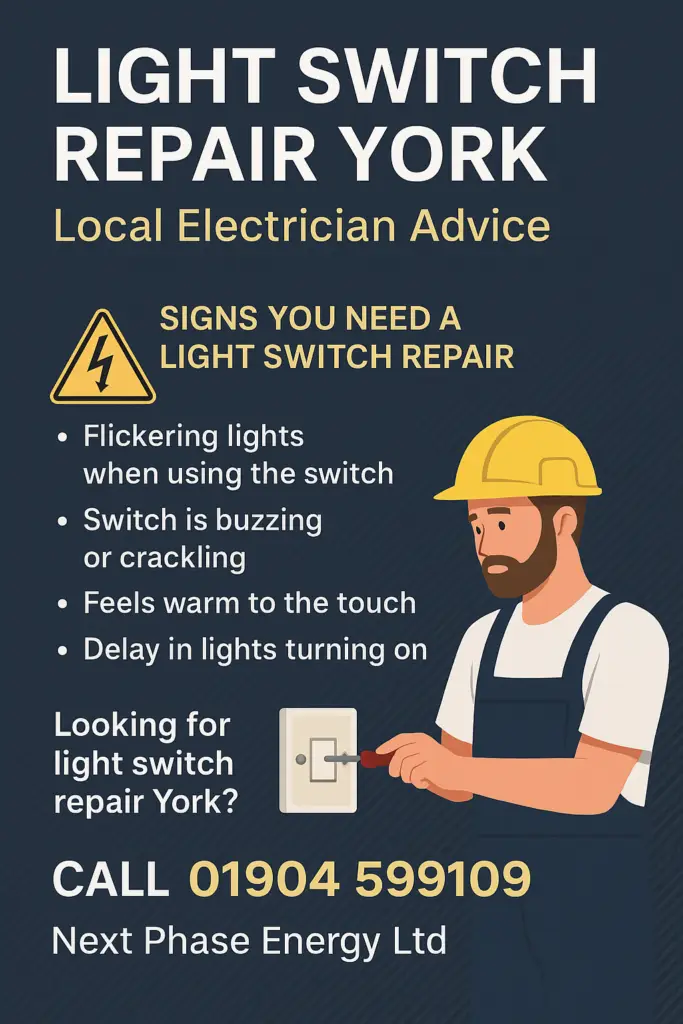
If you’re searching for light switch repair in York, you’re not alone. I’m regularly called out to homes across York, Selby, Howden, Goole, Pocklington, and the surrounding villages to deal with flickering, buzzing, or broken switches. It might not seem like a big deal at first, but an ageing or faulty light switch can often be a sign of something more serious within your electrical system, and it’s something I always recommend getting checked sooner rather than later. ⚠️ Common Signs You Might Need a Light Switch Repair These are the most common symptoms I see when I’m called out to inspect faulty switches: If you’ve spotted any of these issues, it’s best not to ignore them. In many cases, what starts as a simple light switch fault can lead to bigger electrical problems if left unresolved. 🔥 Why Ignoring a Faulty Light Switch Can Be Dangerous When I carry out light switch repairs in York, I sometimes find signs of arcing or overheating behind the switch. These can increase the risk of: Even if the switch seems to still “work,” the underlying issue might be worsening in the background. That’s why I always advise customers to get in touch if anything doesn’t seem right. 👷♂️ How I Help Homeowners with Light Switch Repairs in York I’m the sole electrician at Next Phase Energy Ltd, which means when you contact me, you’ll be speaking directly to the person who’s doing the work. My service is straightforward, honest, and personal. If you need light switch repair in York, I’ll come out, take a look, and let you know exactly what’s going on. I’ll only ever recommend repairs or upgrades that are genuinely needed — no pushy sales, just professional advice and high-quality workmanship. 🏡 Specialising in Older Properties Many of the homes I work in around York and nearby towns have been standing for decades. Some still have original wiring, or outdated fittings that don’t meet modern standards. I regularly work with older domestic systems and can advise you if your home could benefit from more than just a switch repair — for example, if the issue suggests a need for a fuse board upgrade or safety inspection. 🧠 What You Shouldn’t Do I often get asked if light switch repairs are something people can do themselves. My answer is always no. Even a simple switch can hide wiring issues that aren’t visible on the surface. It’s always best to call a qualified electrician — especially in older homes. ✅ What My Customers Say “Matt came out the same day to fix a buzzing light switch in our kitchen. He was friendly, quick, and really knowledgeable. Would definitely recommend!”— Sarah T., York 📅 When Should You Get It Checked? If your home is over 20–25 years old, or if you’ve never had an electrical inspection, now is a great time to get your switches and sockets looked at. Small faults are often the easiest and cheapest to fix — if they’re caught early. 📞 Need Light Switch Repair in York? If you’ve noticed any issues with your light switches or just want to make sure everything’s safe, feel free to get in touch with me directly. 📧 Email: Matt@nextphase-energy.co.uk📱 Phone: 01904 599109📝 Or head to my contact page and fill in the quick form.
Why Modern Fuseboards Matter: Surge Protection, RCBOs & Electrical Safety Explained

Modern Fuseboards & Surge Protection Still running on a fuseboard from 1985? You’re not alone. Many homes across Selby and Goole are still relying on outdated consumer units that lack the protections modern systems offer. What Are RCBOs? RCBOs (Residual Current Breakers with Overcurrent protection) combine the functions of both an RCD and an MCB into a single device. Why it matters: This means more safety, less disruption, and better protection for you and your property. Why Add Surge Protection? Modern homes are full of sensitive devices — smart TVs, routers, laptops, EV chargers, and more. A Surge Protection Device (SPD) shields your entire home from spikes caused by things like lightning or grid switching. Benefits: Why Fuseboard Upgrades Are Worth It Upgrading isn’t just about passing inspection — it’s about: We don’t push people into work they don’t need — but if your system’s outdated, we’ll give you clear advice and let you decide. Need Advice or a Quote? We carry out fuseboard upgrades across Selby, Goole, Howden, and surrounding areas. Whether you’re renovating, renting, or just want your electrics up to scratch, we’ll make it simple and safe. 👉 [ Request a Quote ]
The Hidden Dangers of Old Fuseboards — Why Modern Protection Matters
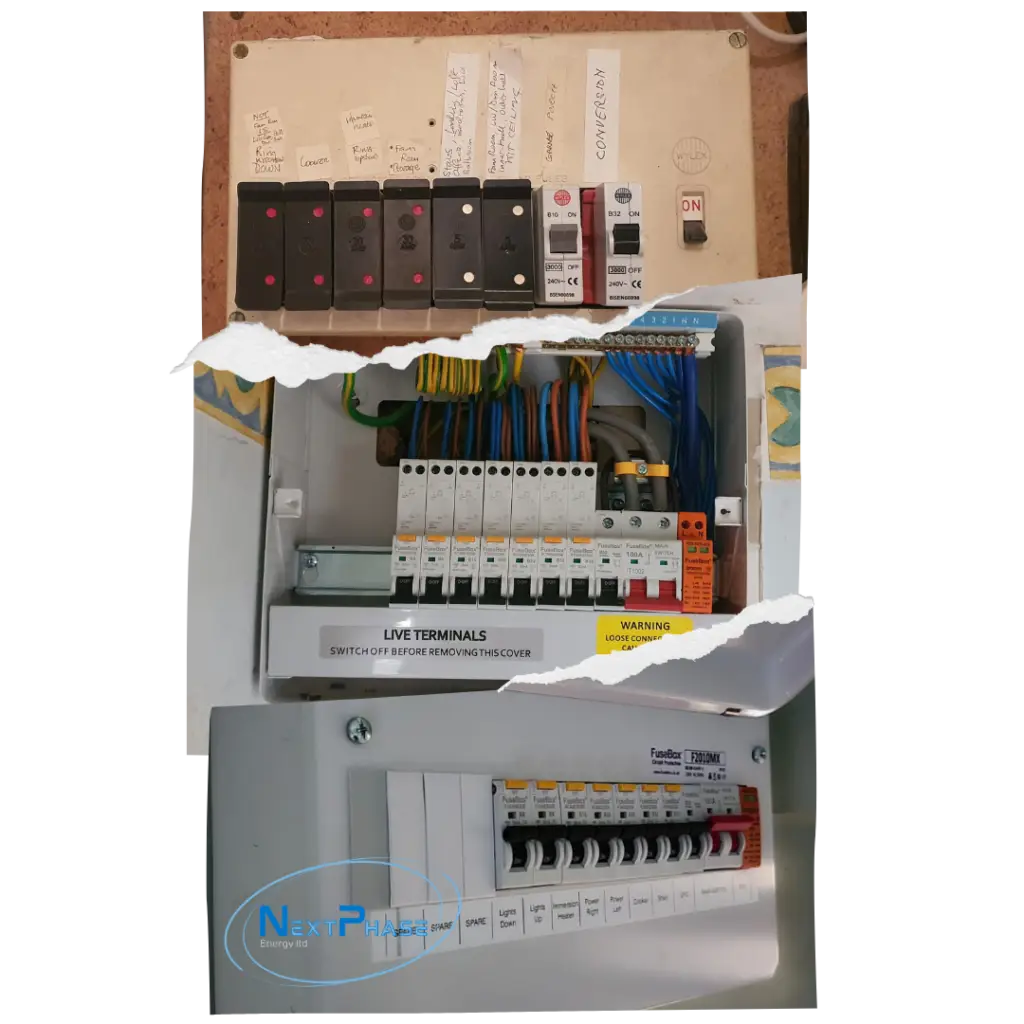
Most homeowners rarely think about their fuseboard—until something goes wrong. But the truth is, that small grey box could be one of the most important safety systems in your home. If your electrical system still relies on outdated protection (no RCDs, no surge protection, fuse wire instead of circuit breakers), you could be exposing your family and property to avoidable risks. In this post, we’ll break down what modern protection looks like, and why it matters more than ever. 🔌 What Are RCBOs and SPDs — And Why Should You Care? RCBOs: Residual Current Devices with Overcurrent Protection RCBOs are the modern standard in fuseboard safety. Unlike old breakers that only shut off power during an overload, RCBOs can also detect life-threatening faults, like current leaking to earth — a common cause of electric shocks. In short:Old breakers protect wires. RCBOs protect people. SPDs: Surge Protection Devices Power surges happen more than you think — lightning strikes, energy supplier faults, and even faulty appliances can send damaging voltage through your system. SPDs absorb that spike before it fries your electronics or starts a fire. Without them, you could lose thousands in damaged appliances. ✅ Why an RCBO Fuseboard with SPD Makes Sense Upgrading to an RCBO board with surge protection doesn’t just bring your home up to modern standards — it gives you: 🧾 The EICR — Your Electrical Safety MOT Before upgrading your fuseboard, it’s smart to get an Electrical Installation Condition Report (EICR). It’s like an MOT for your electrics. We often find homes in the Selby area still using circuit breakers without any RCD protection—which means the system might be shielding your cables, but not you or your family. That’s a serious safety gap. If your EICR flags issues, we’ll walk you through your options clearly — no jargon, no pressure. ⚠️ The Risks of Sticking with an Old Fuseboard Think your old system is “fine”? Here’s what we see every week: 🔥 Increased Fire Risk Old fuseboards are more likely to overheat and spark electrical fires — especially in homes with high appliance use. ⚡ Frequent Faults & Power Cuts Outdated gear doesn’t handle modern electrical loads well. Tripping circuits and faulty breakers become a common annoyance. 😬 Risk of Electric Shock Without RCD protection, your system may not shut down fast enough in a fault — and that can be fatal. 💸 Financial Loss A small fault can ruin appliances, lead to wiring damage, or cause insurance issues after a fire. 🛠️ It’s Not Just a Fuseboard — It’s Your Home’s Safety Net Upgrading your consumer unit is one of the most impactful improvements you can make to a home — both for safety and for future-proofing. Whether you’re renovating, adding new circuits, or just want peace of mind, this is one of those upgrades that pays for itself in protection and peace of mind. 📍 Areas We Cover We proudly serve homeowners across: ✅ Thinking About an Upgrade? We make it easy. From a free quote to a safe, clean install — no hard sell, just honest advice from a qualified local electrician. [ Book Your Fuseboard Quote ]Or give us a call on 01904 599109 and we’ll walk you through your options.
Shocking Bills Ahead? April’s Energy Price Rise Explained – And 5 Electrical Fixes to Cut Your Costs
Rising energy prices aren’t just numbers – they hit home. But you’re not powerless. With some smart electrical improvements, you can take control of your energy usage and your bills.
How to Obtain an Electrical Safety Test Certificate: Understanding an EICR
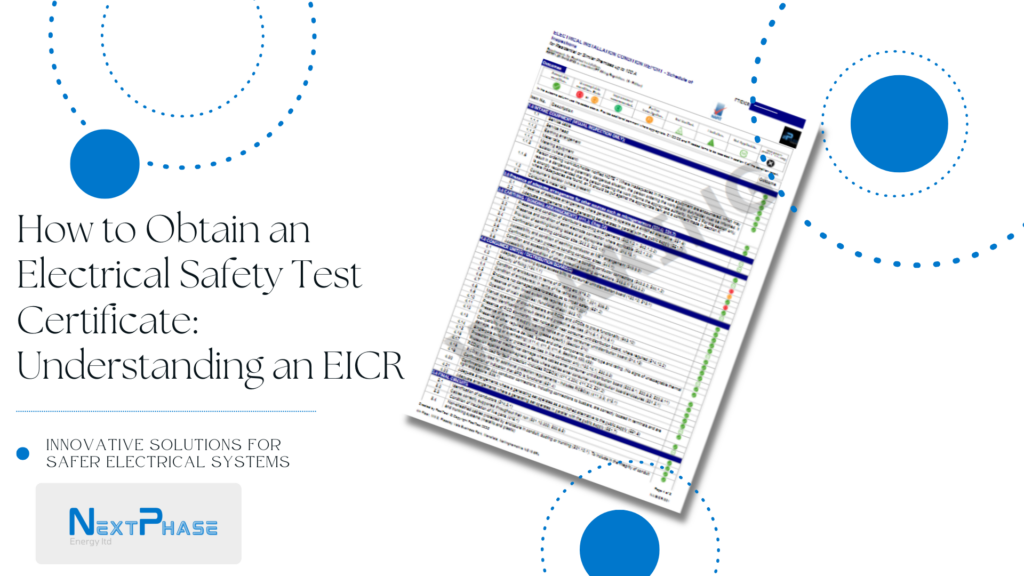
By Matt Crabb Electrical safety is something no property owner should ignore. Whether you’re a landlord, homeowner, or business owner, ensuring your electrics are safe is a legal requirement in many cases—and a smart decision for everyone else. One of the best ways to guarantee electrical safety is by obtaining an Electrical Installation Condition Report (EICR). But what exactly is an EICR, and how do you get an electrical safety test certificate? Let’s break it down in simple, easy-to-understand terms. What is an EICR? An Electrical Installation Condition Report (EICR) is an inspection that checks the fixed wiring installation in a property. Unlike Portable Appliance Testing (PAT), which focuses on plug-in electrical items, an EICR examines things like: The goal? To identify defects, wear and tear, or potential safety risks before they become a real hazard. Why Do You Need an EICR? An EICR isn’t just a box-ticking exercise—it’s crucial for safety and compliance. Here’s why: How to Get an Electrical Safety Test Certificate (EICR) 1. Find a Qualified Electrician Only a certified electrician can perform an EICR. Look for one registered with recognised bodies like NAPIT and other accreditation like Which? Trusted traders. Hiring a trusted professional ensures the job is done correctly. 2. Schedule an EICR Inspection The electrician will visit your property and perform: 3. Receive the EICR Report Once testing is complete, the electrician will issue an EICR certificate with one of the following classifications: 4. Complete Any Necessary Repairs If the EICR report highlights faults (C1 or C2 issues), they must be rectified before the certificate can be issued. Your electrician may be able to fix them immediately or schedule remedial work. 5. Store Your Certificate Safely Once you receive your EICR certificate, keep it in a safe place. Landlords must provide a copy to new tenants and local authorities upon request. How Often Should You Get an EICR? However, if you’ve recently had major renovations, water damage, rodent issues, or frequent electrical faults, you should schedule an EICR sooner. FAQs About an EICR How long does an EICR take? It depends on the property size and number of circuits, but typically: What happens if I get an unsatisfactory an EICR? If your EICR flags C1 or C2 issues, you must fix them ASAP to receive a satisfactory certificate. Your electrician can often handle minor fixes on the spot. How much does an EICR cost? Costs vary depending on: Expect to pay between £250 – £500 for a residential EICR, while commercial properties may cost more. Do I need an EICR for a new build? New properties typically receive an Electrical Installation Certificate (EIC) instead. However, after five years, an EICR is required. FAQs About NextPhase Energy Ltd Who is NextPhase Energy Ltd? NextPhase Energy Ltd is a leading electrical services provider, offering EICRs, electrical installations, and safety inspections across the UK. Are NextPhase Energy Ltd electricians certified? Yes! All electricians at NextPhase Energy Ltd are fully qualified and accredited by NAPIT and Which?. Does NextPhase Energy Ltd provide remedial work? Absolutely. If your EICR identifies faults, our team can carry out repairs quickly and affordably. How can I book an EICR with NextPhase Energy Ltd? Simply call us or book online! Our team is ready to help with all your electrical safety needs. Final Thoughts: Don’t Risk Electrical Safety! An EICR is a simple but essential step to ensure your property’s electrics are safe, legal, and compliant. Whether you’re a landlord, homeowner, or business owner, booking an inspection with a qualified electrician is the best way to protect your property and its occupants. Need an EICR? Get in touch with NextPhase Energy Ltd today!
Why RCBOs Are Essential for Modern Electrical Safety
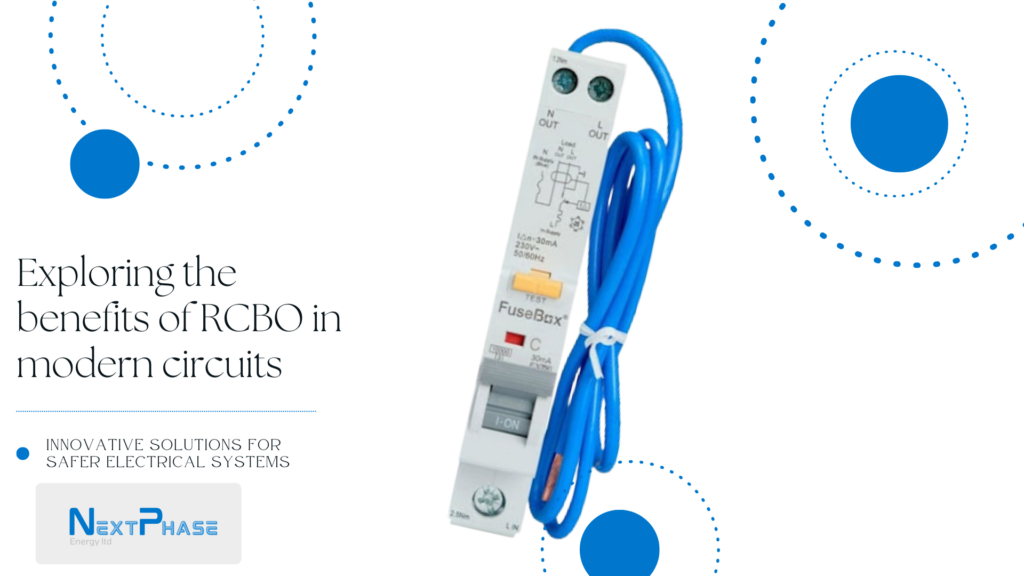
Are you a property owner in York, Goole, or nearby? Protect your home or business with RCBOs—modern devices that prevent electric shocks, overcurrent, and short circuits while isolating faults to a single circuit.
Unlike outdated systems, RCBOs combine safety and convenience, ensuring minimal disruption and enhanced protection for high-risk areas like kitchens and bathrooms. They’re an investment in peace of mind for your family or business. Upgrade to RCBOs today and enjoy safer, smarter electrical systems!
Why Upgrading Your Fuse Board is Essential: A Guide for Property Owners in York and Surrounding Areas
Your fuse board, also called a consumer unit, is the heart of your electrical system.